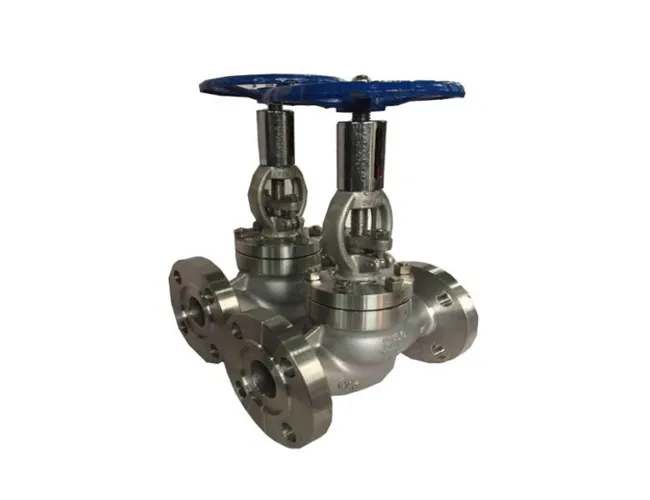
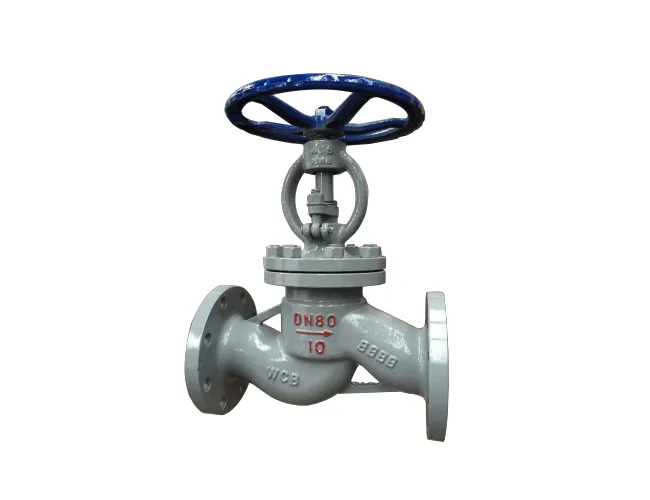
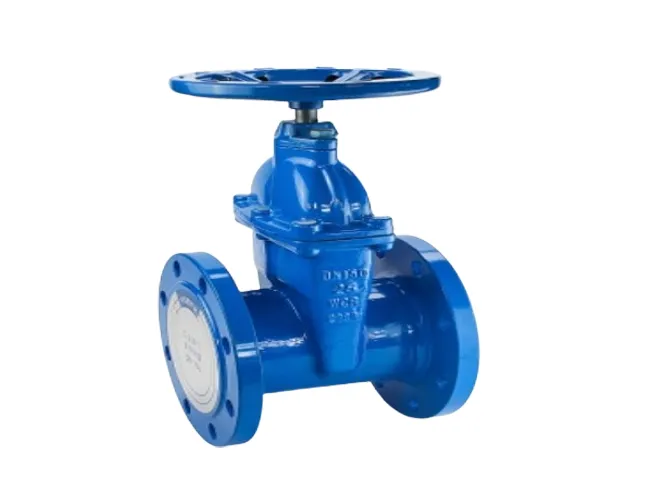
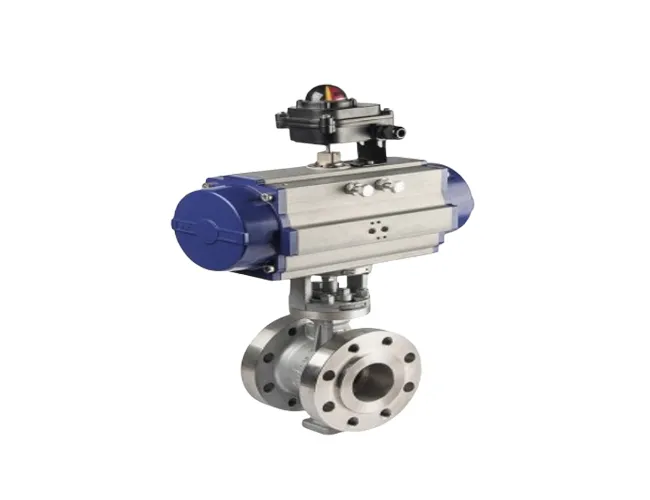
A manual valve is a mechanical device that directly controls the opening and closing elements (gate, ball, butterfly plate, etc.) through human effort (handwheel, handle, lever, or gear mechanism). It is used to cut off, connect, or regulate the flow of fluids (liquids, gases, slurries) in pipelines. Its core advantages include a simple structure, no need for external power, high reliability, and low cost, making it a basic control component in industrial pipeline systems.


Water Treatment: Municipal water supply networks, interception in sewage treatment plants, and building water supply and drainage.
Petroleum and Chemical Industry: Isolation of oil and gas pipelines, feed control of reaction kettles, and discharge of storage tanks.
Power Industry: Boiler feed water systems, steam pipelines, and cooling water circulation.
Heating, Ventilation, and Air Conditioning (HVAC): Flow regulation in heating/refrigeration systems and equipment isolation.
Food and Pharmaceutical Industry: Sanitary process pipelines (e.g., ball valves, diaphragm valves).
Marine Industry: Ballast water systems, fuel oil transportation, and fire-fighting pipelines.
Metallurgy and Mining Industry: Slurry transportation and compressed air control.
Fire Protection Systems: Main control valves of fire-fighting water networks.
Working Principle:
Manual valves drive the valve stem and gate to move through manual operation of the handle or handwheel, thereby controlling the on-off of fluids or regulating flow. Taking the gate valve as an example, its working principle is as follows:
Structural Components: It mainly consists of a valve body, gate, valve stem, and handle. The gate moves vertically in the valve body to control the on-off of fluids.
Operation Principle:
Opening Process: Rotate the handle to drive the valve stem to rotate, and the gate rises to open the fluid channel.
Closing Process: Rotate the handle to lower the gate, which fits tightly with the valve seat to block the fluid.
Sealing Mechanism: When closed, the gate falls completely and contacts the valve seat, forming a sealing structure to prevent leakage.
Operation Specifications:
Before the operation, confirm the opening and closing direction of the valve (usually clockwise to close/counterclockwise to open) and check the limit marks.
When closing to the extreme position, turn back 1/2 to 1 circle to avoid jamming.
When operated by multiple people, tools such as levers should be used for assistance to avoid damaging the valve due to excessive force.
Key Features:
Simple Structure: Few components, low failure rate, and low maintenance cost.
No External Power Required: Relies on manual operation, suitable for power/gas-free environments or explosion-proof scenarios.
High Reliability: No complex control system, with strong long-term stability.
Low Cost: Procurement and maintenance costs are much lower than those of automatic valves.
Emergency Backup: Often used as a bypass or safety redundancy for automatic valves.

Contact Huaqiang for Wholesale Water Treatment Equipment
 +86-05722755556
  Huaqiangenv@163.com
 English