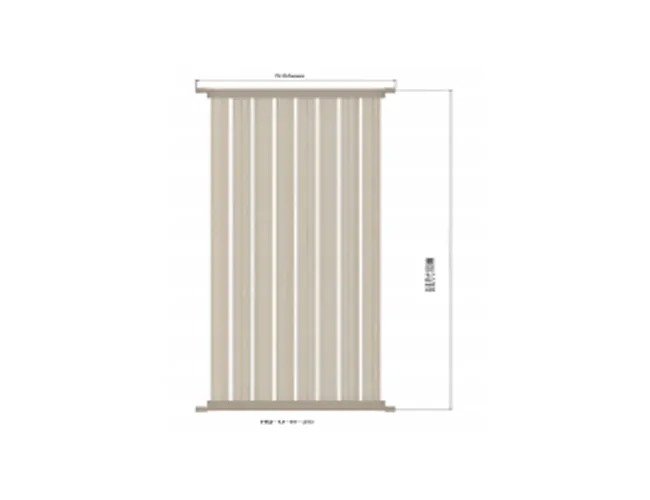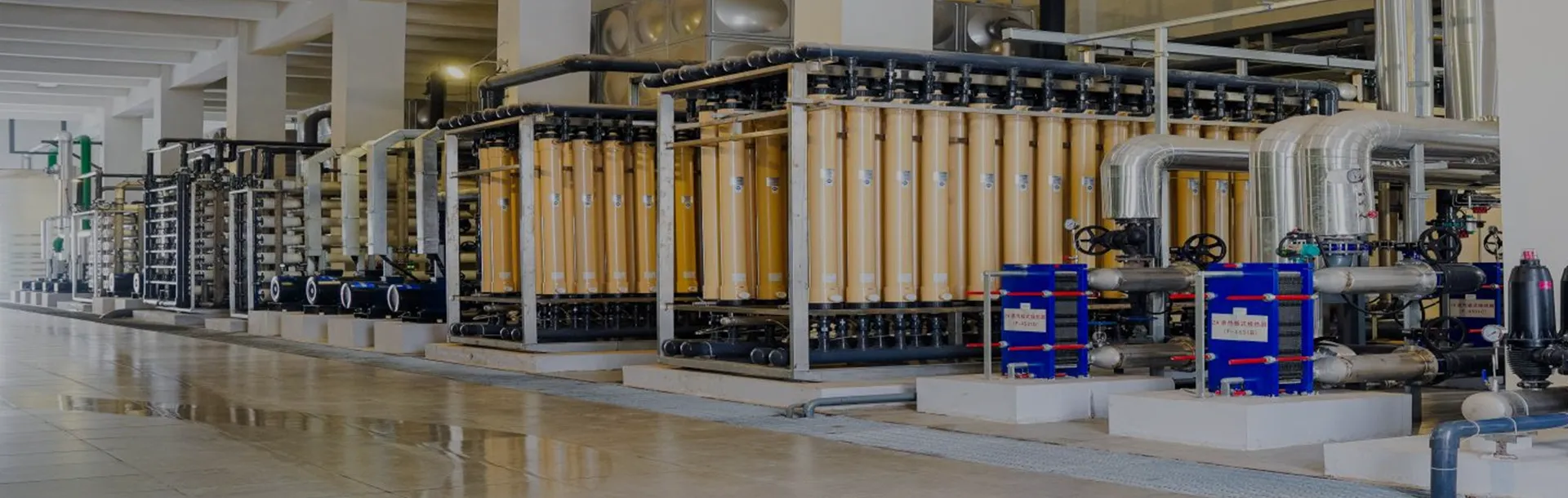
Industrial MBR (Membrane Bio-Reactor) curtain membranes are efficient water treatment components based on MBR technology, specially designed for industrial wastewater treatment, with characteristics such as high filtration precision, strong anti-pollution performance, and long service life.

MBR (Membrane Bio-Reactor) membranes are the core components of membrane bioreactors, belonging to macromolecular separation membranes at the microfiltration or ultrafiltration level, with a pore size range usually between 0.001-0.02μm, which can effectively intercept particles larger than 2-20nm in water.

The working principle is to replace the secondary sedimentation tank in traditional sewage treatment with membrane separation technology to achieve efficient solid-liquid separation. At the same time, the high-concentration activated sludge (8000-12000 mg/L) in the bioreactor can accelerate the degradation of organic matter.
1. Automatic mode
Linkage control: The suction water pump is linked with the fan, and the water pump stops automatically when the fan stops.
Water level control: The suction pump starts when the water level of the MBR tank is above the low water level, and stops when the clear water tank reaches the high level.
Cyclic Operation: The system typically operates intermittently based on a cycle of "8 minutes running and 2 minutes stopping." An alarm is triggered and the system shuts down when the negative pressure gauge exceeds 50 kPa.
2. Manual mode
Independent operation: Manually start and stop equipment such as fans, produced water pumps, and backwash pumps through buttons on the control cabinet.
Commissioning phase: Manual inspection of aeration uniformity, filtration water volume, and transmembrane pressure difference is required during the clear water linkage test run.
3. Special operation mode
Backwash/chemical washing mode: Start the backwash or chemical cleaning program through buttons on the control cabinet to remove membrane pollution.
Low-load operation: During the microbial acclimation phase, the water output is controlled at 1/3-1/2 of the rated value, and gradually increased to full load.
4. Process combination mode
AO-MBR: Anaerobic/aerobic combination, suitable for nitrogen and carbon removal.
A²O-MBR: Anaerobic/anoxic/aerobic combination, realizing simultaneous nitrogen and phosphorus removal.
1. Physical cleaning
(1) Hydraulic flushing
Rinse the membrane surface with a low-pressure water gun (0.1-0.2 MPa) to remove large particulate pollutants such as sediment and fibers. Suitable for daily maintenance, and can be performed once a week for small systems.
(2) Water backwashing
Rinse the membrane filaments with reverse water flow (0.1-0.2 MPa) for 30-60 seconds each time, 1-3 times a day. Pressure must be controlled to avoid membrane damage.
(3) Air-water combined backwashing
First, pass compressed air (0.03-0.05 MPa) to vibrate the membrane filaments for 1-3 minutes, then perform water backwashing. Suitable for large systems, performing once every two days can extend the membrane life.
(4) Empty aeration cleaning
First, stop the water inlet and outlet flow. Then, aerate continuously for 2–3 hours to remove (wash off) the sludge layer using the shear force generated by the water flow.
2. Chemical cleaning
Maintenance cleaning
Alkaline cleaning: Soak in 0.1%-0.5% sodium hydroxide solution for 1-4 hours to remove organics and microorganisms.
Acid cleaning: Soak in 0.5%-1% hydrochloric acid or citric acid solution for 2-6 hours to remove inorganic scaling (such as calcium and magnesium salts).
Frequency: Once every 1-3 months.
Restorative cleaning (offline cleaning)
Trigger conditions: Transmembrane pressure (TMP) > 30 kPa or produced water volume decrease > 20%.
Formula: Soak in 1% sodium hypochlorite (sterilization) + 1% citric acid (descaling) solution for 2-12 hours.
Frequency: Once or twice a year or as needed.
Contact Huaqiang for Wholesale Water Treatment Equipment
 +86-05722755556
  Huaqiangenv@163.com
 English