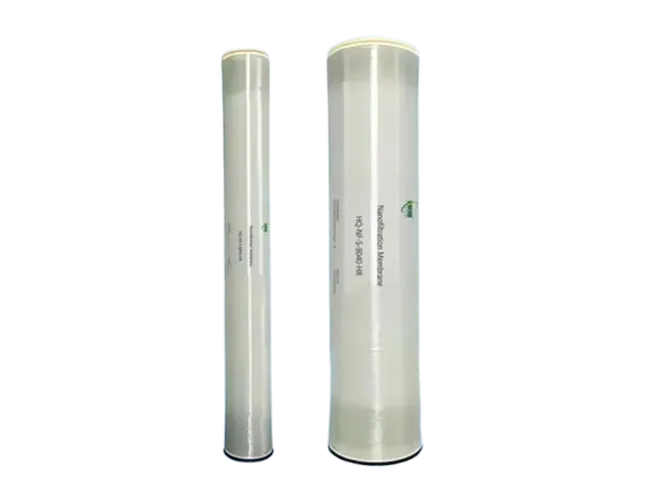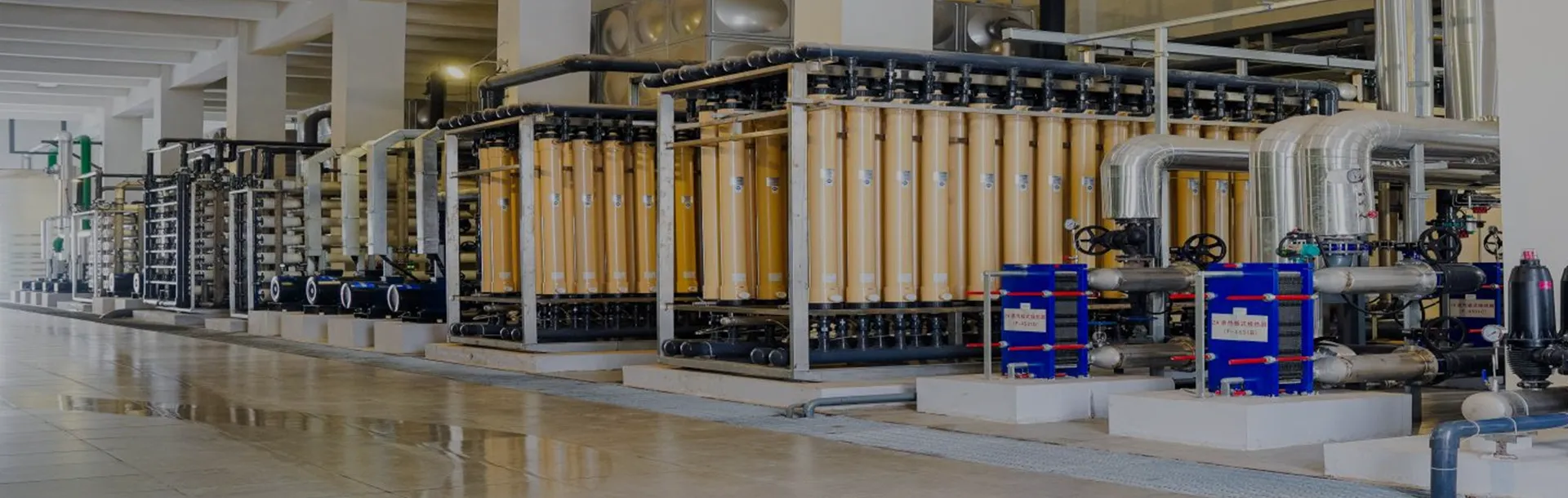
Nanofiltration (NF) membranes have a pore size of more than 1 nm, generally 1-2 nm. They are functional semipermeable membranes that allow solvent molecules, certain low-molecular-weight solutes, or low-valent ions to pass through. They are a special and promising type of separation membrane, named because they can intercept substances with a size of approximately nanometers.
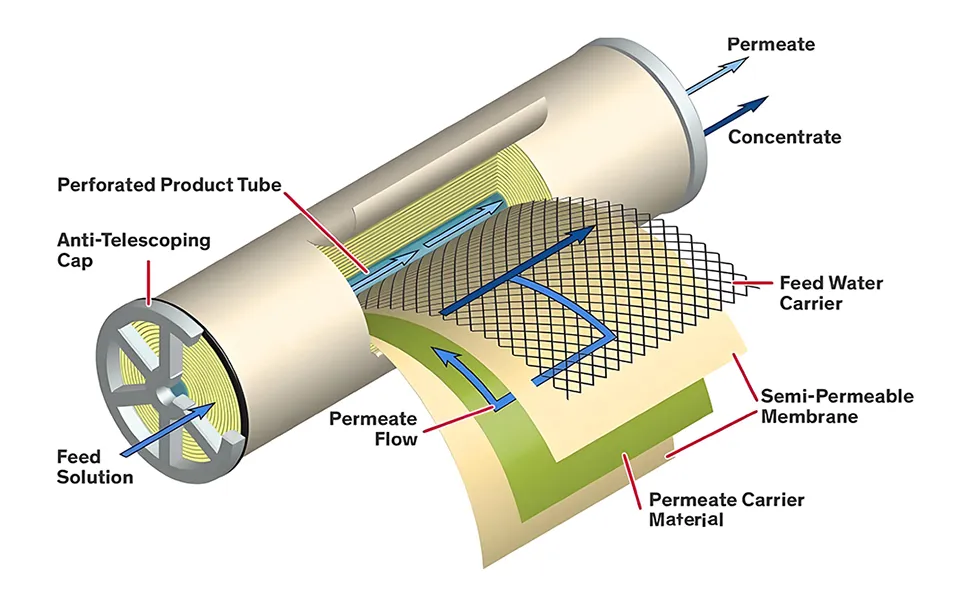



Nanofiltration (NF) membranes have a pore size of more than 1nm, generally 1-2 nm. They are functional semipermeable membranes that allow solvent molecules, certain low-molecular-weight solutes, or low-valent ions to pass through. They are a special and promising type of separation membrane, named because they can intercept substances with a size of approximately nanometers.
Nanofiltration (NF) can achieve true selective filtration (it can effectively remove most pollutants and retain essential mineral ions beneficial to human bones and teeth, such as Ca²⁺ and F⁻). Reverse osmosis (RO) is a non-selective filtration (all beneficial and harmful minerals are removed).
Currently, NF membranes on the market are 30-100% more expensive than RO membranes. We have been working hard to control costs to make hollow fiber NF membranes acceptable to consumers. We have an integrated production line from upstream raw materials to membrane modules, which enables us to better control costs and provide cost-effective products.
According to current data, NF membranes demonstrate high efficiency in removing the most critical harmful substances in water, including heavy metals, endocrine disruptors, pigments, antibiotics, hormones, and more.
Contact Huaqiang for Wholesale Water Treatment Equipment
 +86-05722755556
  Huaqiangenv@163.com
 English