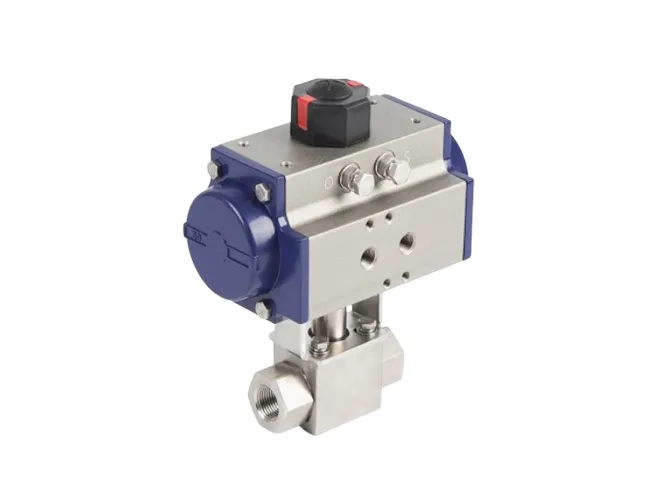
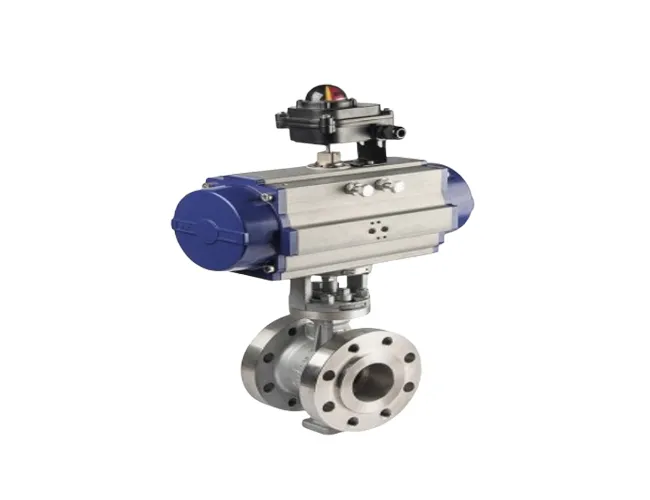
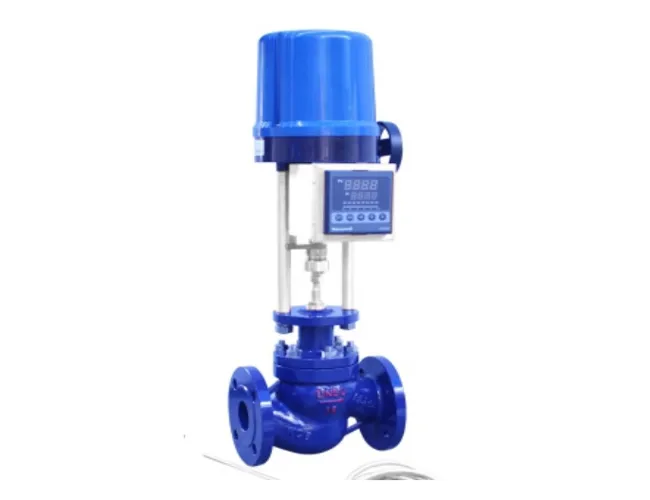
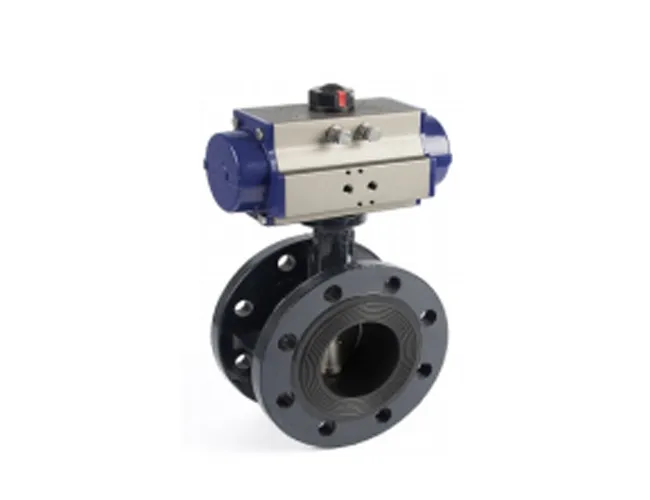
A pneumatic valve drives an actuator (such as a cylinder or piston) through compressed air, converting pneumatic energy into mechanical energy to drive the valve core to rotate or lift, thereby changing the on-off state of the flow channel or regulating the medium flow. For example: Ball Valve: The ball rotates 90° to achieve full opening/full closing; its flow channel is consistent with the pipeline diameter, the resistance is extremely small.
Control Valve: Receives a 4–20mA signal through a positioner to precisely control the opening degree for flow or pressure regulation.
Shut-off Valve: Pneumatic pressure pushes the piston to overcome spring force, achieving rapid shut-off (as fast as 0.05 seconds).The power transmission actuators are divided into single-acting (spring return) and double-acting (bidirectional pneumatic control). The valve action is controlled by switching the air path direction through a solenoid valve.


Industrial Automation: Emergency shut-off of oil pipelines (ball valves), flow regulation of chemical reaction kettles (control valves).
Energy Systems: Cooling water control in power stations (gate valves), gas transmission (high-pressure ball valves).
Environmental Protection Field: Sewage treatment (butterfly valves), dust removal systems (three-way reversing valves).
Special Working Conditions: High-temperature steam (metal-sealed butterfly valves), strongly corrosive media (PTFE-lined diaphragm valves).
Working Principle
The working principle of a pneumatic valve is to drive the actuator to move through compressed air, control the opening/closing state of the valve core or valve stem, and then regulate the on-off or flow of fluids. Its core component is the pneumatic actuator, which drives the valve to act through changes in air pressure, featuring fast response and supporting automatic control.
Key Features:
Automatic Control: Achieves automatic regulation through pneumatic devices without manual intervention, adapting to industrial automation needs.
Rapid Response: Pneumatic drive enables the valve to complete opening/closing actions in milliseconds, suitable for scenarios requiring quick response.
High-Temperature/Corrosion Resistance: Manufactured with special materials, suitable for harsh working conditions in chemical, metallurgical, and other industries.
Energy Saving and Environmental Protection: It only relies on air pressure for drive, reducing energy consumption and environmental pollution.
Reliable Structure: The valve body has a simple structure, facilitating maintenance and featuring a low failure rate.
Common types include ball valves, sliding valves, cone valves, and globe valves, with different types suitable for different fluid control scenarios.
General Specifications of Pneumatic Valves
Nominal Diameter: Usually DN50 to DN300 mm, suitable for different pipeline systems.
Pressure Rating: Matches process requirements, for example, high-temperature models can withstand +230℃~+450℃.
Temperature Range: Conventional applicable temperature is -29℃ to +300℃; some specially designed models can withstand higher temperatures (e.g., 650℃).
Flow Characteristics: Flow Coefficient (KV/Cv Value): Calculated based on process flow.
Turndown Ratio: Pneumatic control valves usually have a large turndown ratio.
Actuator Parameters: Supply Pressure: Standard air supply pressure is 0.4~4.0MPa; some models support higher pressure (e.g., 4~240KPa).
Contact Huaqiang for Wholesale Water Treatment Equipment
 +86-05722755556
  Huaqiangenv@163.com
 English