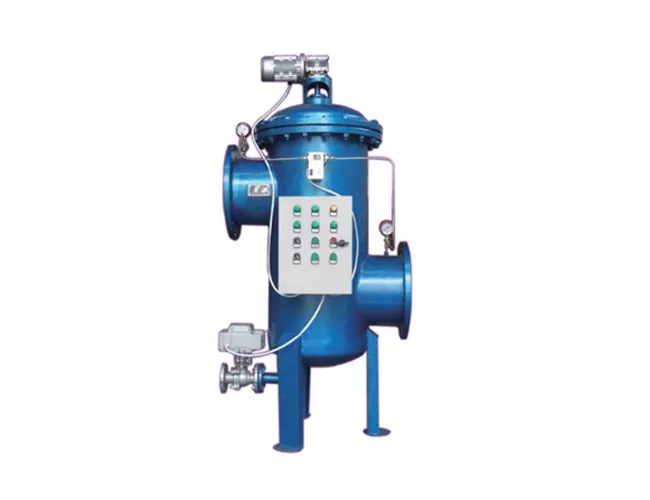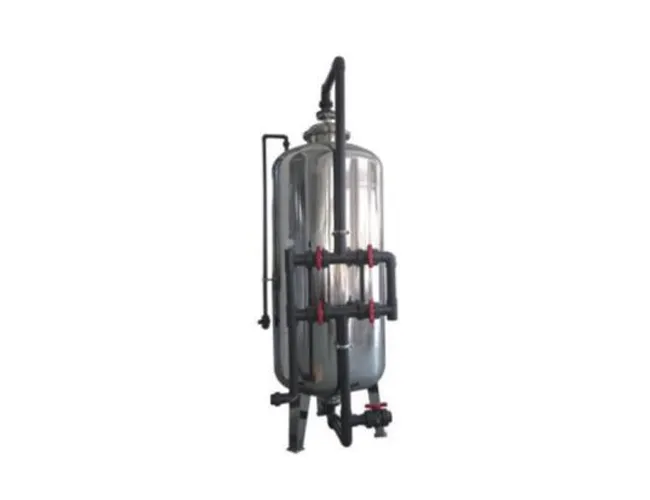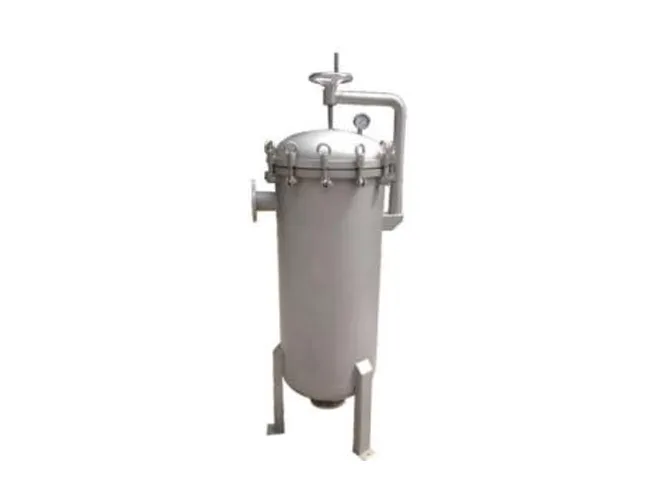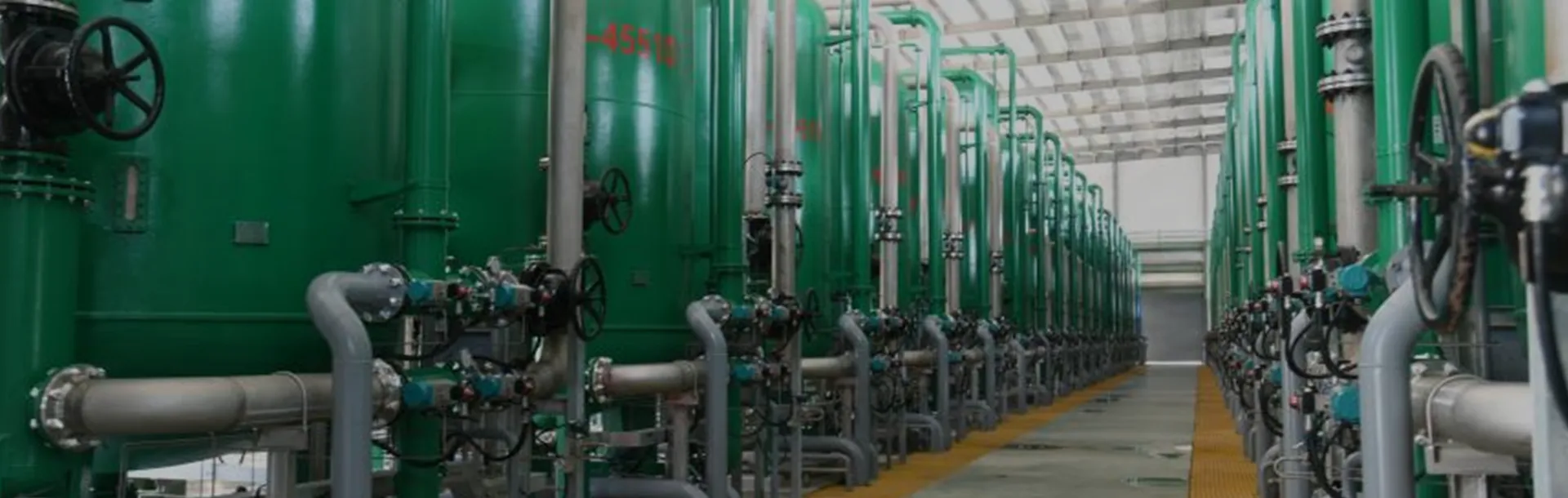
Industrial water filters are key equipment used to separate and purify impurities in industrial fluids.

The working principle of industrial water filters is mainly based on physical interception and pressure difference control. Impurities are intercepted through filter screens or filter cartridges, and automatic cleaning is realized by using backwashing mechanisms to ensure continuous and efficient filtration.
The advantages of industrial water filters are mainly reflected in efficient separation, material adaptability, automatic operation, environmental protection, and energy saving, etc., as follows:
1. Efficient separation capacity
Through the precise design of filter cartridges, filter bags, and other components, industrial water filters achieve efficient removal of micron-level or even nanometer-level particles, with an impurity removal rate exceeding 99%, thus ensuring the purity requirements of subsequent processes.
2. Material and process adaptability
Adopting materials such as metals and high molecular polymers, it supports high temperature from -20℃ to 300℃ and strong acid-alkali environments, adapting to the diverse working conditions of chemical, pharmaceutical, new energy, and other fields.
3. Automation and integration
Some equipment supports fully automatic control systems, combined with sensors and PLC technology to achieve unmanned operation. The modular design is convenient for integration with production lines, reducing installation and maintenance costs.
4. Environmental protection and resource recovery
Efficient filtration realizes the recovery of catalysts and valuable materials, reduces waste discharge, conforms to the trend of green production, and can significantly reduce raw material loss, especially in the pharmaceutical field.
The daily maintenance of industrial water filters should focus on pressure difference monitoring, filter cartridge maintenance, lubrication maintenance, and anti-corrosion inspection. The specific measures are as follows:
1. Pressure difference monitoring
Check the pressure gauge reading daily. When the pressure difference exceeds 1.5 times the initial value (for example, the initial pressure difference is 0.03MPa, and it needs to be cleaned or replaced when it exceeds 0.08MPa). Measure the pressure difference between the inlet and outlet every week. When it exceeds the set threshold, backwashing or filter cartridge replacement is required.
2. Lubrication maintenance
Supplement grease every 500 hours of operation, focusing on lubricating components such as bearings and transmission devices, using grease that meets ISO standards.
3. Anti-corrosion and appearance inspection
Check whether the tank body has rust or coating peeling every week. If local rust spots are found, they need to be polished and repainted with anti-corrosion paint. Conduct a comprehensive anti-corrosion treatment every year, and control the thickness at 150-200μm.
4. Moving parts inspection
Regularly check whether the valve opens and closes smoothly and the pipeline is sealed to ensure no leakage or jamming.
Contact Huaqiang for Wholesale Water Treatment Equipment
 +86-05722755556
  Huaqiangenv@163.com
 English