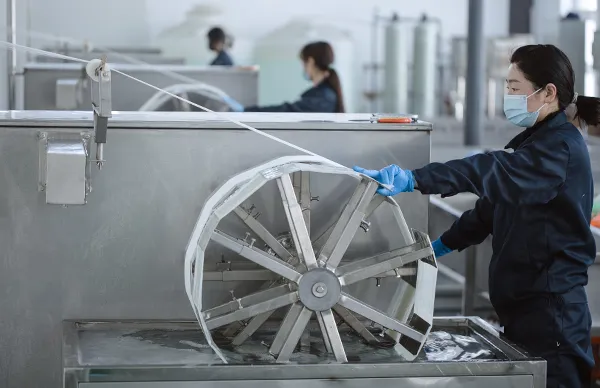
Industrial water treatment systems combine physical, chemical, biological and membrane processes to produce process water, treat wastewater, enable reuse or recover resources. The correct system must match feedwater quality, treatment targets, operating conditions, discharge requirements and maintenance capacity.
A poorly matched process can cause unstable water quality, membrane fouling, high chemical use and frequent shutdowns. Huaqiang approaches system selection from an engineering perspective, connecting water analysis, product selection, system integration, commissioning and lifecycle support.
An industrial water treatment system is a complete process train that converts raw water or wastewater into water meeting a defined production, reuse or discharge standard.
Most systems contain three stages:
Pretreatment removes suspended solids, oil, colloids, hardness or oxidants that may damage downstream equipment.
Core treatment removes dissolved salts, organic matter, microorganisms or specific pollutants.
Polishing and monitoring stabilizes final water quality and confirms compliance with the required standard.
Industrial water treatment technologies should be compared by what they remove, where they fit in the process and what operating conditions they require.
| System | Main Function | Typical Use | Key Design Concern |
|---|---|---|---|
| Multimedia and cartridge filtration | Removes particles and suspended solids | Pretreatment | Solids loading and pressure drop |
| Ultrafiltration (UF) | Removes colloids, bacteria and fine particles | RO pretreatment and reuse | Flux, fouling and cleaning |
| Nanofiltration (NF) | Removes hardness, multivalent ions and selected organics | Softening and selective separation | Salt selectivity and concentrate handling |
| Reverse osmosis (RO) | Removes most dissolved salts and ions | Demineralized and reuse water | Scaling, recovery and energy |
| Membrane bioreactor (MBR) | Combines biological treatment and membrane separation | Industrial wastewater | Organic loading, aeration and fouling |
| Ion exchange | Removes selected ions with resin | Softening and demineralization | Regeneration chemicals |
| Electrodeionization (EDI) | Removes residual ions after RO | High-purity water | RO feed quality, silica and carbon dioxide |
Process selection should begin with representative water analysis because the same equipment can perform differently under different industrial conditions.
For process water, engineers commonly evaluate turbidity, suspended solids, hardness, alkalinity, total dissolved solids, silica, iron, organic matter, temperature and microbial activity. Industrial wastewater may also require analysis of COD, oil, ammonia, phosphorus, heavy metals, fluoride, color and salinity.
A practical matching approach is:
Use clarification, flotation or filtration for suspended solids and oil.
Use UF for fine particles, colloids and microorganisms.
Use NF for hardness, color or multivalent-ion removal.
Use RO for desalination, demineralization and high-quality reuse.
Use biological treatment or MBR for biodegradable organic pollutants.
Use ion exchange or EDI for very low residual ion levels.
Use concentration, evaporation or crystallization for high-salinity wastewater requiring zero liquid discharge or resource recovery.
Operating conditions determine whether a system remains reliable after commissioning.
Engineers must consider peak contaminant loads, seasonal temperature changes, production cycles, site footprint, operator capability and operating hours. They should also confirm concentrate disposal, automation needs and possible future expansion.
These factors affect membrane area, tank volume, pump selection, redundancy, instrumentation, chemical dosing and cleaning design. A technically effective process may still be unsuitable if it is difficult to operate or cannot tolerate water-quality fluctuations.
A practical selection sequence is:
Define the water source and treatment objective.
Obtain representative water analysis and expected variation.
Identify contaminants affecting production or downstream equipment.
Compare treatment trains by performance, cost, recovery and waste generation.
Validate the design through calculations, testing or relevant project experience.
A demineralized water system may use filtration, UF, RO and EDI. A high-COD wastewater reuse system may require equalization, biological treatment, MBR and RO. High-hardness water may need softening or NF before RO.
Engineering experience connects product performance with actual operating conditions.
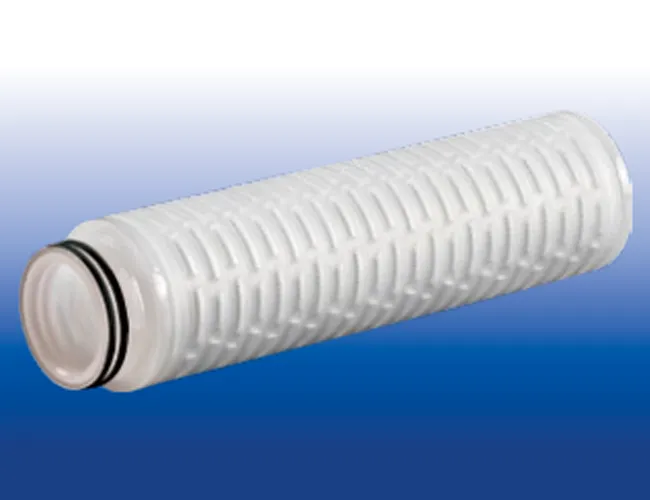
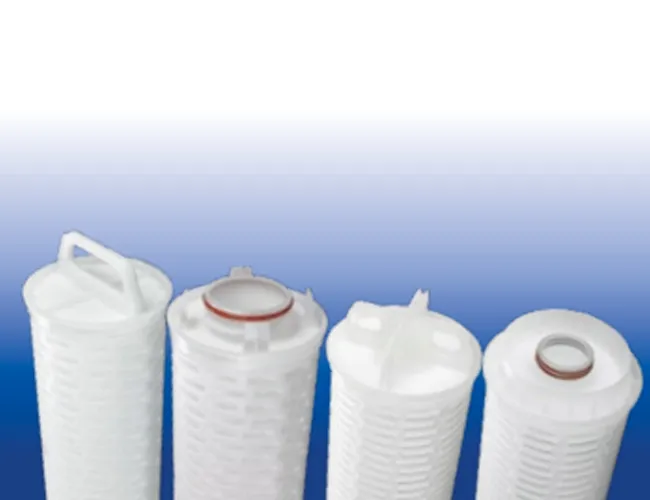
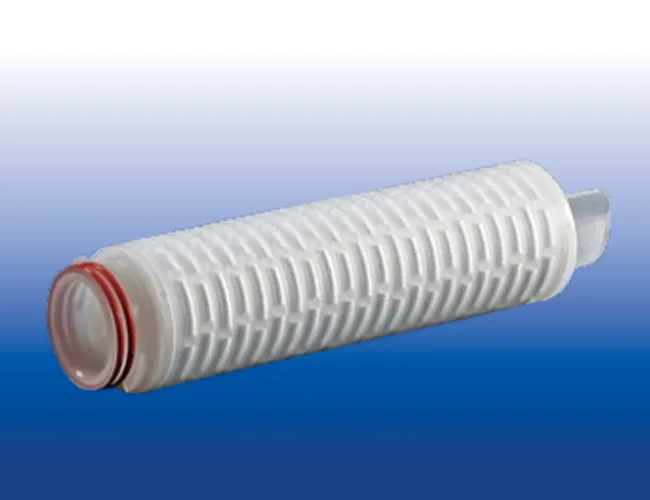
Huaqiang provides industrial water treatment systems supported by membrane technology, filtration components, equipment manufacturing and system integration. Rather than recommending products from a catalogue alone, the engineering team evaluates water quality, treatment goals, site conditions and maintenance requirements before developing the process.
This helps ensure that membranes, filters, pumps, valves, instruments and controls operate as one complete system. It also supports installation, commissioning, process adjustment and long-term operation.
Customers can review Huaqiang’s customized water treatment solutions and industrial project experience before discussing a suitable treatment train.
Reliable selection starts with accurate water data, a defined treatment target and a realistic understanding of site conditions. By combining product knowledge with system design and field engineering experience, Huaqiang helps industrial customers develop stable, maintainable and practical solutions.
Planning an industrial water treatment project? Share your water analysis, required capacity and target water quality with Huaqiang to receive a process and system recommendation.
Use UF for suspended solids, colloids and microorganisms. Use RO when dissolved salts and ions must be removed. Many industrial systems use UF before RO.
Typical inputs include water analysis, flow rate, target water quality, discharge or reuse requirements, utilities and expected water-quality variation.
UF is mainly used to remove suspended solids, colloids, bacteria and fine particles, while RO removes dissolved salts and ions. In many industrial water treatment systems, UF is installed before RO to protect RO membranes and improve operating stability.

 +86-05722755556
  Huaqiangenv@163.com
 English