Ultrafiltration (UF) and reverse osmosis (RO) are both widely used membrane technologies in industrial water treatment, but they solve different problems. UF mainly removes suspended solids, colloids, bacteria and fine particles, while RO removes dissolved salts, ions and many low-molecular-weight contaminants. In many industrial systems, the two technologies are not alternatives—UF is used as pretreatment before RO to improve system stability and membrane life.
The right choice depends on feedwater quality, required product water quality, recovery targets, operating pressure, maintenance conditions and the role of the membrane process within the complete treatment system.
The main difference between UF and RO is the size and type of contaminants they separate.
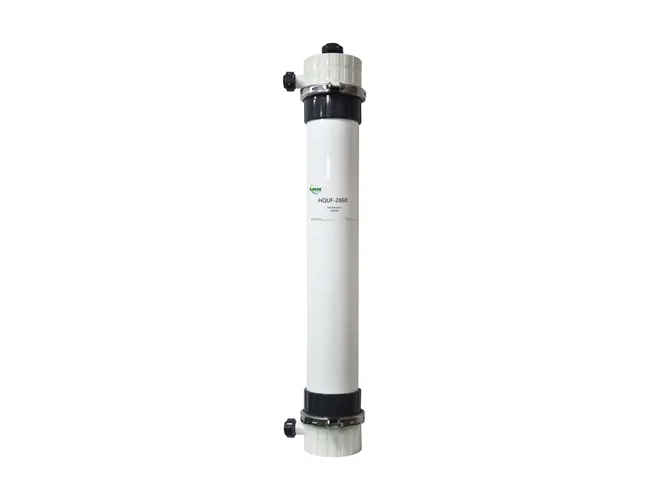
Ultrafiltration uses a porous membrane that allows water and dissolved salts to pass while retaining larger contaminants such as suspended solids, colloids, microorganisms and macromolecules. It is commonly used for clarification, pretreatment and wastewater polishing.
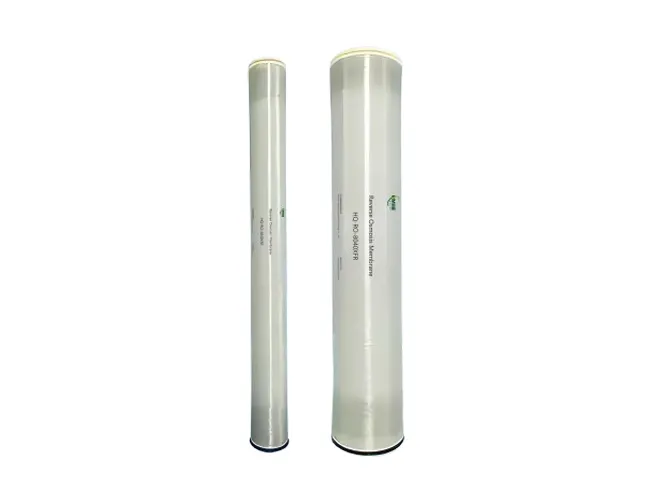
Reverse osmosis uses a much tighter membrane and applied pressure to separate water from dissolved salts, hardness ions, silica and other dissolved substances. RO is therefore commonly used for desalination, demineralized water production and high-quality industrial water reuse.
| Factor | Ultrafiltration (UF) | Reverse Osmosis (RO) |
|---|---|---|
| Main purpose | Remove particles and colloids | Remove dissolved salts and ions |
| Typical separation range | Approx. 0.01–0.1 μm | Molecular-level separation |
| Removes suspended solids | Yes | Yes, but pretreatment is preferred |
| Removes bacteria | Yes | Yes |
| Removes dissolved salts | No | Yes |
| Operating pressure | Lower | Higher |
| Energy demand | Lower | Higher |
| Concentrate production | Relatively limited | Produces concentrated reject stream |
| Common role | Pretreatment and clarification | Desalination and high-quality reuse |
The important engineering point is that membrane selection should be based on the contaminant that must be removed—not simply on which technology provides finer filtration.
Ultrafiltration is appropriate when the primary treatment objective is to control turbidity, suspended solids, colloids and microorganisms.
Typical industrial applications include:
Pretreatment before RO or NF
Surface water clarification
Industrial wastewater reuse
Process water preparation
Removal of fine particles after conventional filtration
Protection of downstream membrane systems
UF is particularly useful when feedwater quality fluctuates. Compared with relying only on multimedia or cartridge filtration, a properly designed UF system can provide more consistent downstream water quality.
However, UF does not significantly reduce total dissolved solids. If the treatment target requires lower conductivity, reduced salinity or removal of dissolved ions, another treatment stage such as RO, NF, ion exchange or EDI is normally required.
Reverse osmosis is selected when dissolved contaminants must be removed.
Common industrial RO applications include:
Demineralized process water
Boiler make-up water
Industrial wastewater reuse
Electronics and semiconductor water preparation
Pharmaceutical process water
High-salinity water treatment
Feedwater preparation before EDI
RO performance depends heavily on feedwater conditions. Hardness, silica, suspended solids, organic matter, microorganisms and oxidants can cause scaling, fouling or membrane damage.
For this reason, engineers rarely evaluate an RO unit independently. The entire pretreatment system must be designed around the raw water characteristics and expected operating conditions.
UF and RO frequently work as complementary treatment stages.
A typical industrial membrane treatment process may be:
Raw Water → Pretreatment → Ultrafiltration → Reverse Osmosis → EDI or Final Polishing
UF removes particles and colloidal material before they reach the RO membrane. This can reduce the fouling load on RO, improve feedwater consistency and support longer operating cycles between chemical cleanings.
RO then removes the dissolved salts and ions that pass through UF.
This combination is commonly used where reliable high-quality process water or wastewater reuse is required. However, the exact process may change depending on feedwater characteristics. High-hardness water, for example, may require softening or NF, while water containing significant organic pollutants may require biological or chemical treatment before UF.
The decision should begin with water analysis and a clearly defined treatment target.
Before selecting a membrane process, engineers should evaluate:
Suspended solids and turbidity – High particulate loading may require clarification or filtration before UF.
TDS and conductivity – High dissolved salt levels usually require RO or NF.
Hardness and silica – These affect RO scaling risk and recovery rate.
Organic contamination – High organic loading can increase membrane fouling.
Required product water quality – Process water, boiler water and ultrapure water have very different specifications.
Recovery and discharge requirements – RO concentrate must be considered during system design.
Operating and maintenance capability – Cleaning systems, instrumentation and automation should match site conditions.
For example, a factory requiring low-turbidity cooling water may only need conventional filtration and UF. A plant requiring low-conductivity boiler make-up water is more likely to need UF followed by RO and possibly EDI.
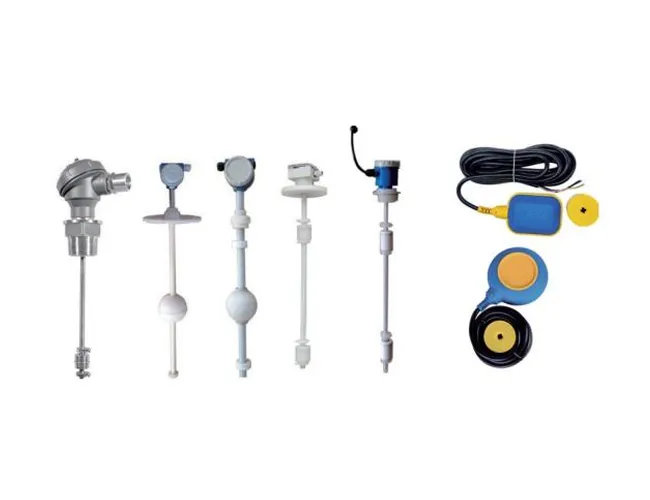
Choosing between UF and RO is not simply a membrane purchasing decision. The membrane must operate within a complete treatment system that includes pumps, filters, tanks, dosing equipment, valves, instruments, controls and cleaning facilities.
Huaqiang supplies industrial ultrafiltration membranes and industrial reverse osmosis membranes as part of broader industrial water treatment applications.
For projects requiring integrated membrane treatment, Huaqiang also provides RO/NF water treatment equipment and customized system solutions based on actual feedwater quality, required capacity and final water specifications.
The engineering objective is not simply to install more treatment stages. It is to select the minimum effective process that delivers stable water quality while controlling energy consumption, chemical use, membrane cleaning and long-term operating cost.
UF and RO perform different roles in industrial water treatment. UF is best suited for suspended solids, colloids and microorganisms, while RO is required when dissolved salts and ions must be removed.
For many industrial applications, the most reliable solution is not UF versus RO but UF plus RO, with each technology performing the separation task it is designed for.
The final process should always be based on representative water analysis, treatment targets, operating conditions and lifecycle requirements.
Planning an industrial membrane water treatment system? Share your feedwater analysis, required flow rate and target water quality with Huaqiang for a process and membrane system recommendation.
No. UF removes suspended solids, colloids, bacteria and larger organic molecules, but most dissolved salts pass through the membrane. RO or another desalination process is required when TDS reduction is needed.
Not in every system, but UF is often used before RO when feedwater contains significant suspended solids or colloidal material. It can provide more stable RO feedwater and reduce membrane fouling.
RO provides finer separation and removes dissolved salts and many ions that UF cannot remove. However, this does not make RO a replacement for proper pretreatment. RO membranes require suitable feedwater conditions for reliable operation.
RO generally uses more energy because it operates at higher pressure to overcome osmotic pressure. UF typically operates at lower pressure and therefore has lower energy demand.
Yes. Industrial wastewater reuse systems often combine biological treatment or clarification with UF and RO. The exact process depends on COD, suspended solids, salinity, hardness and the required reuse water quality.
 +86-05722755556
  Huaqiangenv@163.com
 English